Types of motorcycle helmets
15 Nov 2026 · 6 min read
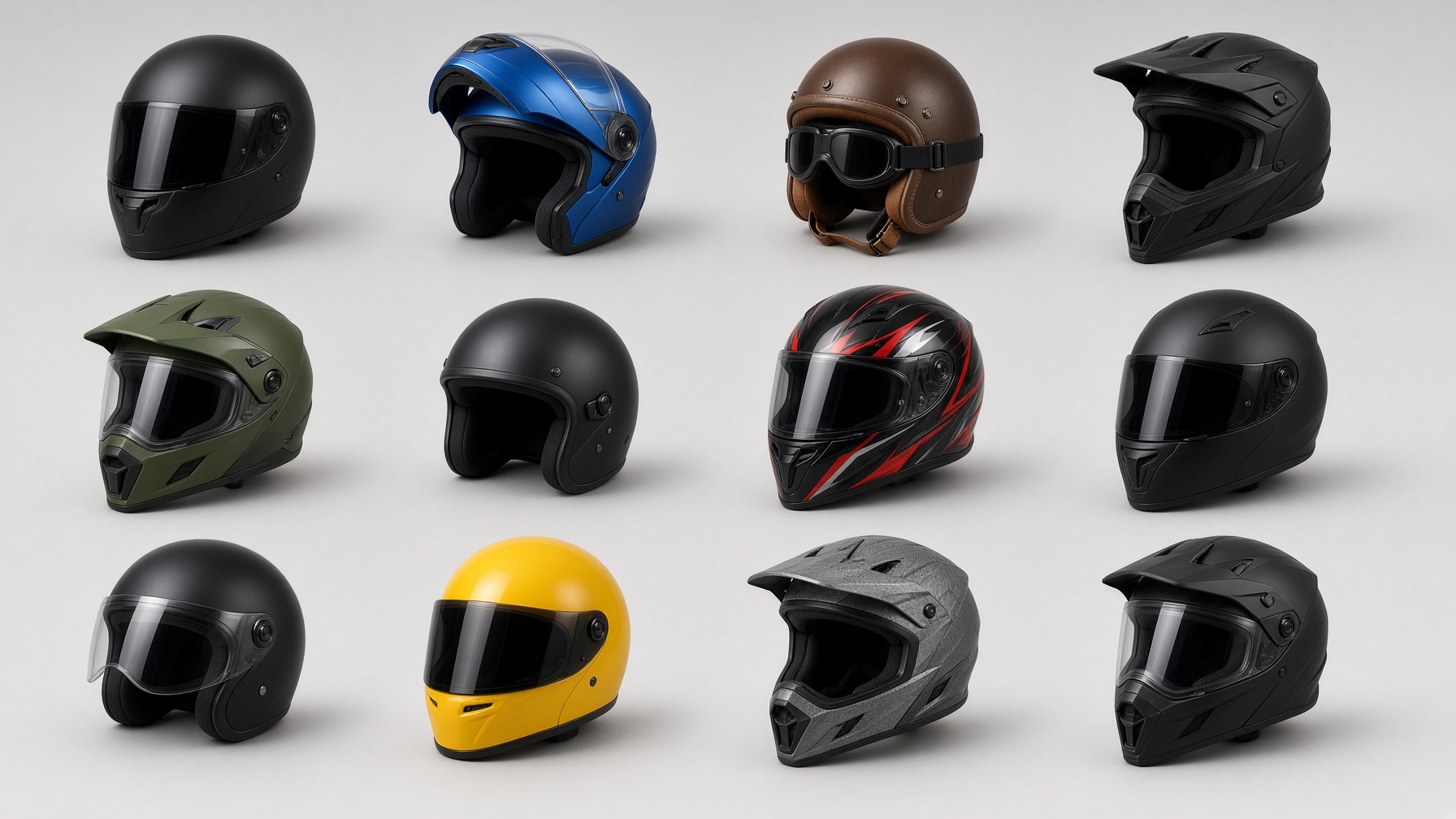
1. Full face
It covers the whole head, including the jaw, the chin and the face. It suits town and the highway, especially when you want full protection.
2. Modular
It covers the head, the face and the chin, but the chin bar can be lifted. It is handy on a long trip and in town. You may ride with the chin bar up only if the helmet is certified for that position.
3. Open face, three-quarter
It protects the top, the sides and the back of the head. The face and the chin stay open. People wear it mainly in town.
4. Motocross
It covers the head and the chin, and it has a peak against sun and mud. For dirt roads and motocross, usually with goggles.
5. Dual sport
It protects the whole head, the face and the chin. It has both a clear visor and a peak, so enduro riders and tourists choose it when they ride on tarmac and on dirt.
6. Half helmet
It covers mainly the top of the head. The face, the jaw and most of the sides stay open. It suits town, but it protects less than any other type.
7. Aerodynamic
It covers the head, the face and the chin completely. The shape cuts wind resistance and adds stability at high speed. For sports bikes and the track.
8. Smart
How much it protects depends on the build. The usual one is a full face: it covers the head, the face and the chin. Inside there is communication, navigation or sensors. That helps on a trip and every day.
9. Jet
It covers the top, the sides and the back of the head. It usually has a visor that shields the face from the wind, but the chin is open. It is common on scooters and town bikes.
10. Classic full face
It protects the whole head, including the face and the chin, just as a modern full face does. The retro shape suits classic motorcycles, cafe racers and riding in town.
11. Trials
It covers the top, the sides and the back of the head. The face and the chin stay open. For motorcycle trials, where the point is precise manoeuvring at low speed.
12. Pilot
It has a chin guard, so it covers the head, the face and the jaw. It suits classic and town motorcycles, but it really protects only if the chin piece is structural and certified.
Size, the ECE 22.06 standard and how to match a helmet to the way you ride are set out separately: What kinds of motorcycle helmets there are, and how they differ.
Id no. 112