
Honda leads. Jawa and IZH won’t quit
12 Nov 2026 · 5 min read
As of 1 November 2026 the Transpordiamet register lists 38,587 motorcycles. These are category L3e machines: ordinary motorcycles without a sidecar. The figure includes 1,286 motorcycles taken off the road for the winter but still listed as registered.
How many machines are on the register
Besides the registered ones, the register still holds 5,047 L3e motorcycles whose record is suspended. That is a different status: the machine is in the database, but it is not counted as registered.
Sidecar motorcycles (category L4e) are counted separately: 1,668 are registered. Three-wheeled motorcycles (L5e) number 360. Add the three categories and Estonia has 40,615 registered motorcycles. Mopeds and quads are not in this count.
Which makes are most common
More than half of the L3e fleet is Japanese. Honda has 6,335 motorcycles, 16.4%. Then come Yamaha with 5,753 (14.9%), Kawasaki with 4,405 (11.4%) and Suzuki with 3,709 (9.6%). Together those four makes are 20,202 machines, or 52.4% of registered motorcycles.
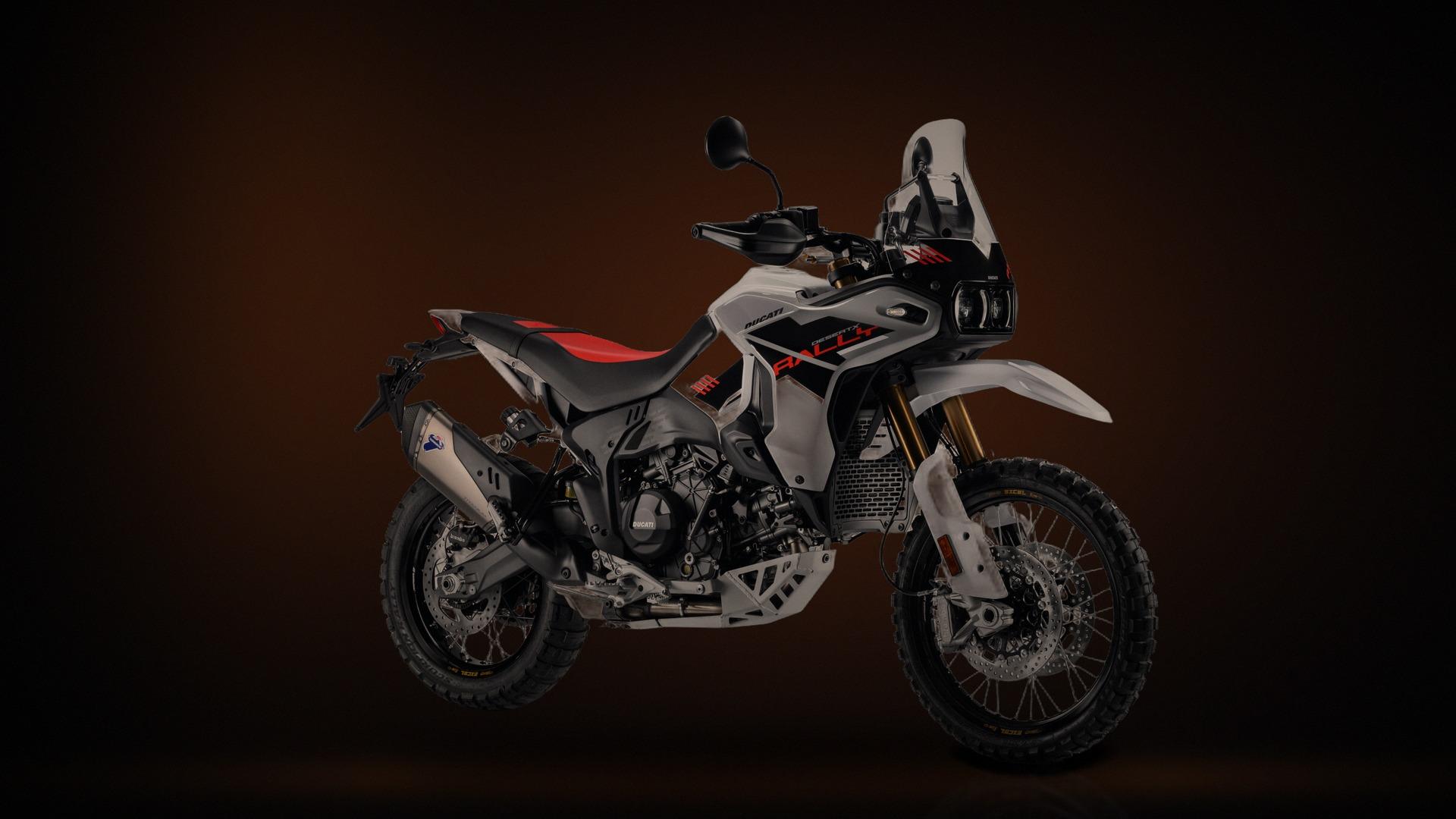
After them come BMW (3,311; 8.6%), Harley-Davidson (2,426; 6.3%) and KTM (2,269; 5.9%). Eighth place is Jawa: 1,071 motorcycles, 2.8%. Then Ducati (923; 2.4%), Aprilia (887; 2.3%), CFMOTO (836; 2.2%), Triumph (734; 1.9%), IZH (694; 1.8%), Husqvarna (578; 1.5%) and Indian (323; 0.8%).
The first ten makes cover 80.6% of the fleet, the first fifteen 88.8%.
The most common model is the Honda CB 600F, with 500 machines. Second is the BMW R 1200 GS, with 328.
Historic motorcycles
In Estonia a vehicle can be a vanasõiduk, a historic vehicle, if at least 35 years have passed since it was built, it has historic and cultural value, and two experts have recognised it. At least five old-vehicle clubs authorise the experts, and Transpordiamet recognises them. The agency and Eesti Vanatehnika Klubide Liit keep the list. The recognition act and the registration certificate are valid for 12 years.
The open register data has no separate vanasõiduk mark, so the ages below follow the date of first registration, not the number of officially recognised machines.
Of the 38,587 registered L3e motorcycles, 4,619 were first registered at least 35 years ago, no later than 1 November 1991. That is 12.0% of the fleet. First registered before 1990: 3,814 machines. Before 1960: 692.
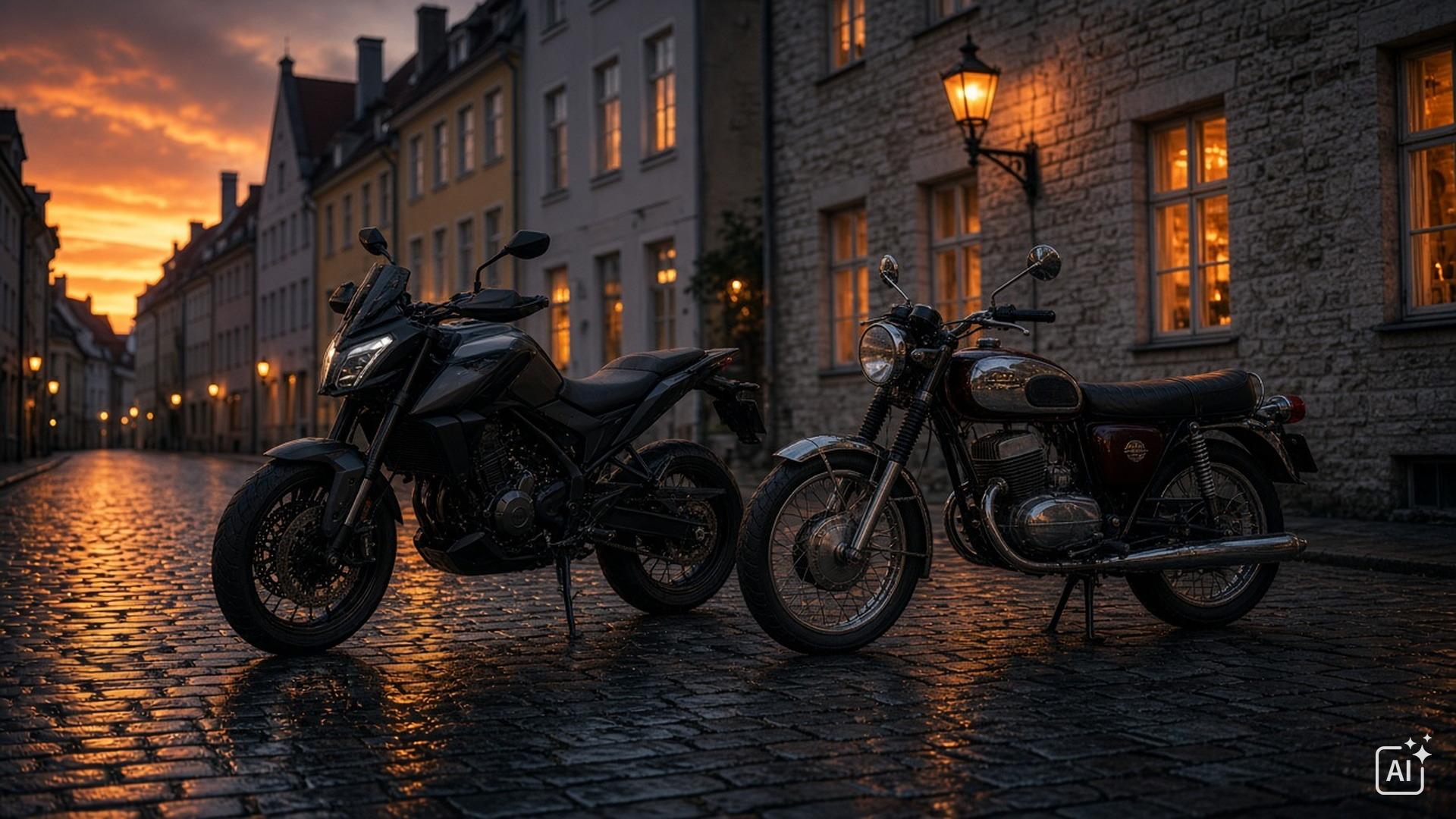
Among those older motorcycles Jawa is the most common: 1,024 of the 1,071 registered Jawas are past the 35-year line. IZH has 682 such machines. Then come Honda, Yamaha, Suzuki, BMW and Kawasaki, and also Kyiv KMZ machines, the Dnepr, with 140, Tula TMZ scooters with 95, Minsk MMVZ with 72, Hungarian Pannonia with 63, Soviet Vyatka (VPMZ) with 62 and Czech ČZ with 61. Ural (IMZ) and Voskhod are there too.
The history is even clearer among sidecar motorcycles. Of 1,668 registered L4e machines, 1,568 were first registered 35 or more years ago. The largest groups here are KMZ and Dnepr with 805, IZH with 342, Ural (IMZ) with 198 and Jawa with 176.
Add motorcycles with and without a sidecar and the register lists 1,247 Jawas, 1,036 IZH machines, 949 KMZ and Dnepr machines and 247 Urals.
The earliest first-registration date in the L3e set is 1919, an Indian Power Plus. There is a 1922 Henderson De Luxe, several Indians from the late 1920s, and a BMW R2 and R11 from 1931.